

This international, non-promotional website created by developed and funded by Pierre Fabre is intended only for HealthCare Professionals outside the United States for educational purposes. This tool is designed solely for educational purposes to help healthcare professionals visualise and understand the results of the statistical modelling study published by Gravas S. et al, 2024. It has not been validated for and is not intended for clinical use with individual patients. It is not intended to substitute for medical assessment or to drive or inform diagnostic or therapeutic decisions for any conditions for individual patients.

Persistent prostatic inflammation status is associated with both the development and progression of lower urinary tract symptoms (LUTS) / benign prostatic hyperplasia (BPH).1

Prostatic inflammation and development of BPH1

Chronic prostate inflammation (CPI) is identified as an important etiological component in the development of BPH. A chronic prostate inflammation is characterized by inflammatory cell infiltration within the prostatic tissue, predominantly consisting of T lymphocytes, as well as B lymphocytes and macrophages. These activated immune cells release pro-inflammatory cytokines, inducing the expression of several growth factors resulting in abnormal proliferation of epithelial and stromal prostate cells. The subsequent increased oxygen demand of these cells leads to local hypoxia producing low levels of reactive oxygen species (ROS) promoting angiogenesis and the production of additional growth factors.
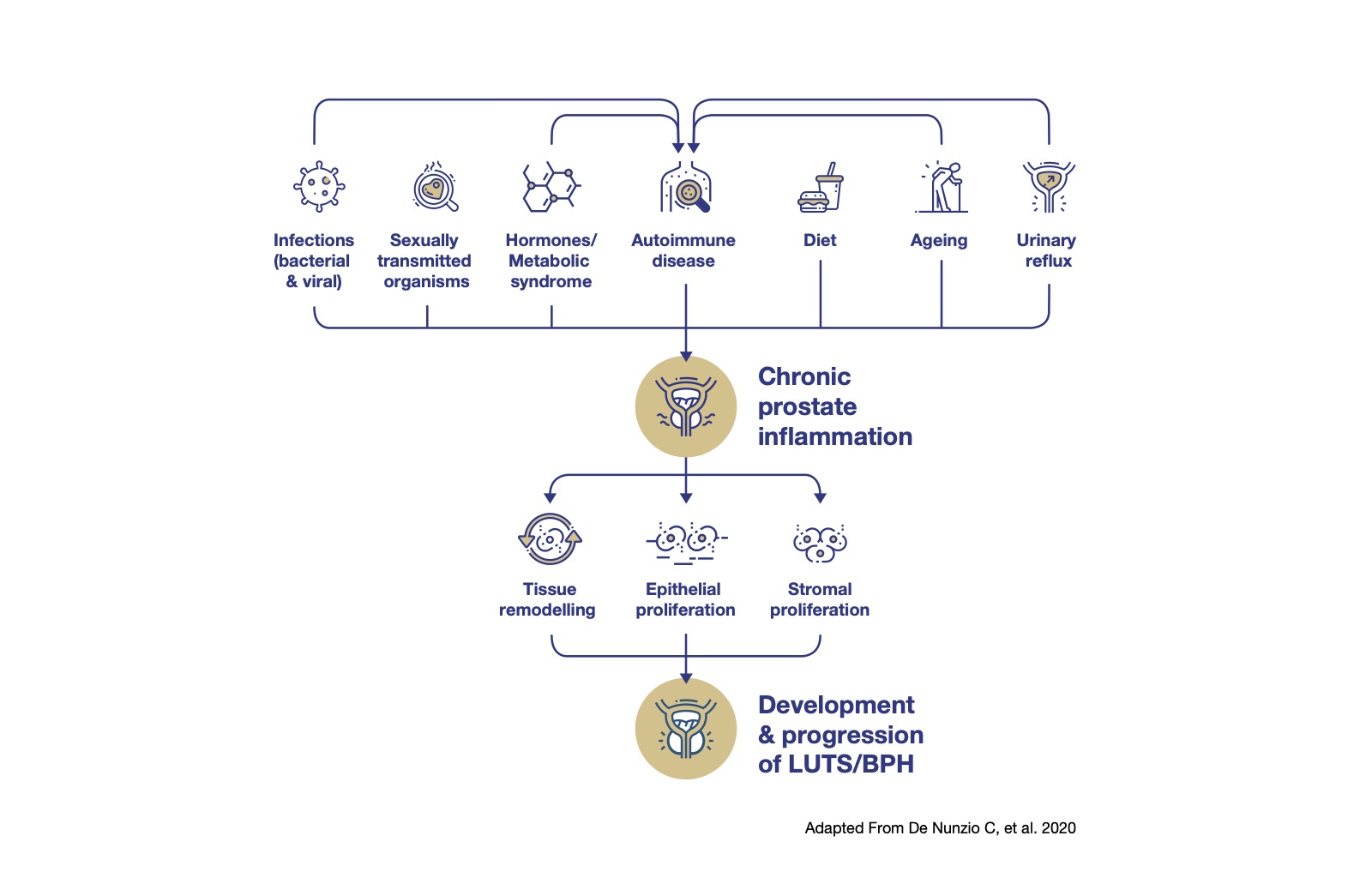
1. De Nunzio C, et al. Inflammation is a target of medical treatment for lower urinary tract symptoms associated with benign prostatic hyperplasia. World J Urol. 2020 Nov;38(11):2771-2779. doi: 10.1007/s00345-020-03106-1. Epub 2020 Feb 14. Erratum in: World J Urol. 2020 Jun 10;: PMID: 32060633; PMCID: PMC7644532.